Video library
Colorectal health, explained
43 short videos on the conditions patients ask about most — what they are, why they happen, and what treatment actually involves. Recorded and reviewed by Dr. Kamrava.
Allen Kamrava, MD, MBA, FACS, FASCRS· Board-certified in Colon & Rectal Surgery and General Surgery· Reviewed
 Leak After Bowel Surgery: What It Is and How It's TreatedThis explainer details the potential complication of an anastomotic leak following bowel surgery. The goal of surgery is to create a strong, watertight connection (anastomosis) using healthy tissue, excellent blood supply, and zero tension. A leak occurs when the delicate healing balance is disrupted, and a gap forms in the new seal, allowing bowel contents to escape. The risk ranges from 2% to 21% of cases. Nearly half of all leaks can appear after the patient has gone home. Key warning signs include fever, abdominal pain that is worsening (not improving), unusual fluid from the incision, or a generalized feeling of being unwell. Treatment is personalized. Smaller leaks in stable patients might be managed non-surgically with antibiotics and potentially a drain. Larger leaks or if the patient is very sick may necessitate a return to the operating room. Surgeons may create a temporary stoma (a detour) to route stool away from the healing connection, allowing it to rest and heal properly. Scarring from a leak can sometimes lead to long-term changes in bowel function.
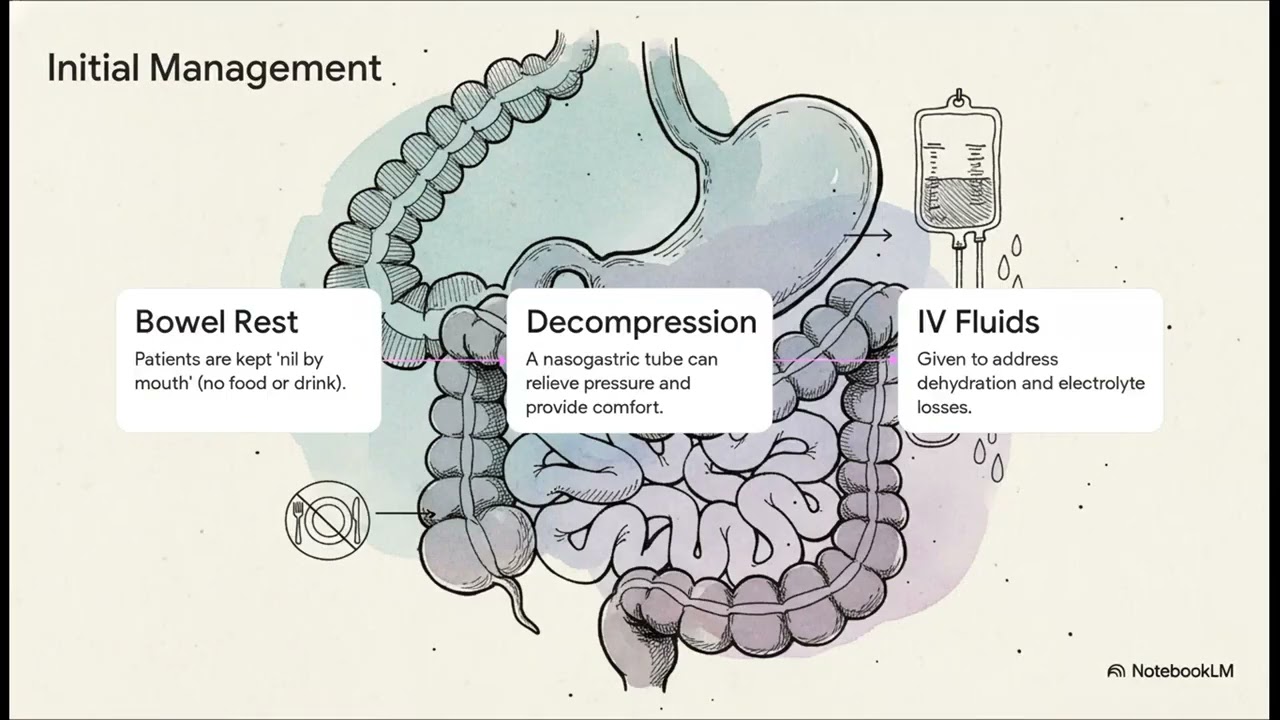 Digestive Traffic Jam: Understanding a Blocked BowelThis video explains a bowel obstruction as a "traffic jam" inside the digestive system where a blockage stops the flow of gas, fluid, and food, causing the bowel to swell. Causes are grouped into three categories (inside the intestine, in the wall, or from outside pressure). The focus is on the single biggest cause of small bowel obstructions: scar tissue or adhesions (sticky bands forming after abdominal surgery) that twist or squeeze the intestine. Classic warning signs include abdominal distension (swelling, seen in 2/3 of patients), abdominal pain (starting as cramping waves and becoming constant), nausea, vomiting, and most notably, the inability to pass gas (90% of people) or have a bowel movement (over 80% of people). Diagnosis involves a physical exam, medical history (especially past surgeries), and imaging. While X-rays can show swollen loops of intestine, the CT scan is the gold standard because it provides a detailed 3D picture showing the exact location and cause of the blockage, with an accuracy of about 96% for large bowel obstructions. Initial treatment aims to stabilize the patient by resting the bowel (stopping eating/drinking), draining backed-up fluid and air with an NG tube, and providing IV fluids. For obstructions caused by adhesions, the common starting point is non-surgical management, which is highly successful, with rates reaching 87%. Surgery is only pursued if the non-surgical approach fails or if there are signs of a more serious problem.
 IBS Explained: Simple Guide to Irritable Bowel SyndromeThis resource provides a straightforward guide to Irritable Bowel Syndrome (IBS), a common condition defined by abdominal pain (at least one day a week) linked to changes in bowel movements, frequency, or consistency. It is emphasized that IBS is a benign condition; it does not physically damage the intestines or lead to diseases like cancer. IBS is broken down into subtypes (IBS-C, IBS-D, IBS-Mixed) based on stool consistency, often using the Bristol stool chart. Diagnosis is one of exclusion, where the doctor rules out other conditions (like celiac disease or infection) using blood tests, stool tests, or sometimes a colonoscopy. Treatment is highly personalized, starting with education, reassurance, and diet/lifestyle changes. Dietary focus includes soluble fiber (like psyllium) and the low FODMAP diet. Specific medications are chosen based on the patient's IBS subtype to target the main symptom. Having a strong, trusting relationship with the doctor is a massive part of successful management.