Digestive Traffic Jam: Understanding a Blocked Bowel
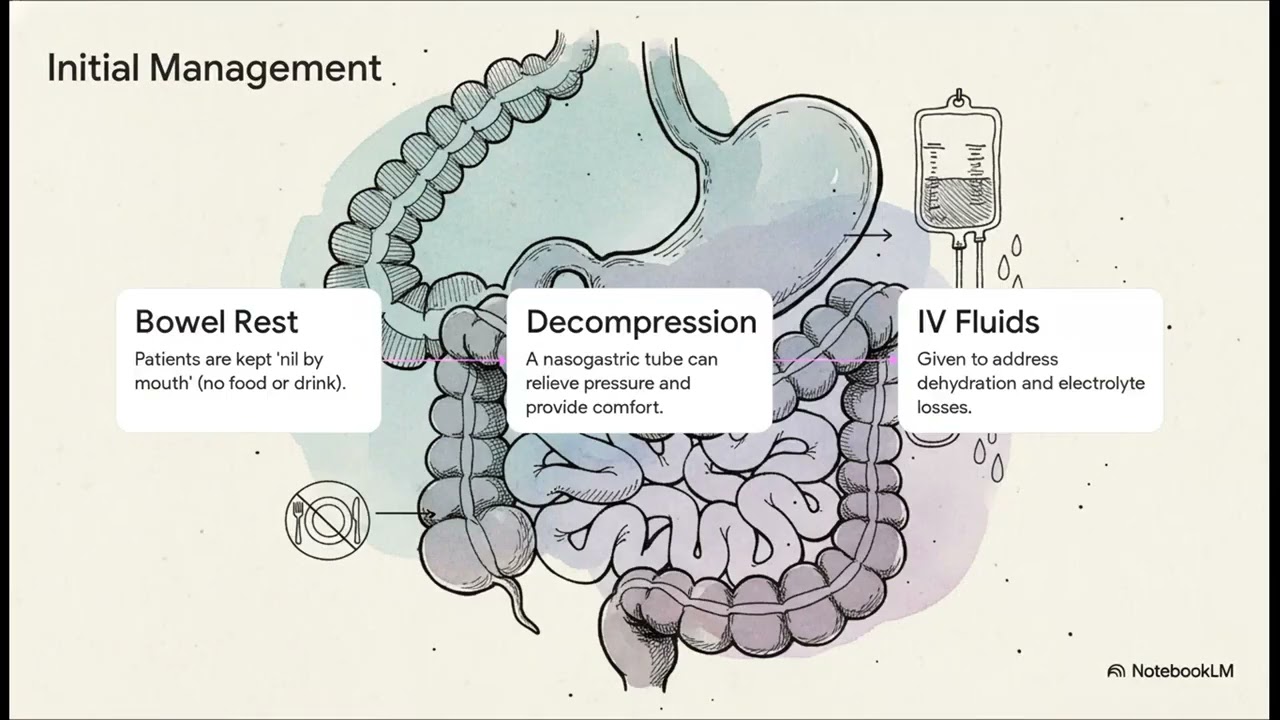
This video explains a bowel obstruction as a "traffic jam" inside the digestive system where a blockage stops the flow of gas, fluid, and food, causing the bowel to swell. Causes are grouped into three categories (inside the intestine, in the wall, or from outside pressure). The focus is on the single biggest cause of small bowel obstructions: scar tissue or adhesions (sticky bands forming after abdominal surgery) that twist or squeeze the intestine. Classic warning signs include abdominal distension (swelling, seen in 2/3 of patients), abdominal pain (starting as cramping waves and becoming constant), nausea, vomiting, and most notably, the inability to pass gas (90% of people) or have a bowel movement (over 80% of people). Diagnosis involves a physical exam, medical history (especially past surgeries), and imaging. While X-rays can show swollen loops of intestine, the CT scan is the gold standard because it provides a detailed 3D picture showing the exact location and cause of the blockage, with an accuracy of about 96% for large bowel obstructions. Initial treatment aims to stabilize the patient by resting the bowel (stopping eating/drinking), draining backed-up fluid and air with an NG tube, and providing IV fluids. For obstructions caused by adhesions, the common starting point is non-surgical management, which is highly successful, with rates reaching 87%. Surgery is only pursued if the non-surgical approach fails or if there are signs of a more serious problem.


