Benign Colorectal Disease
Adhesive Small Bowel Obstruction
Adhesive small bowel obstruction is a blockage of the small intestine caused by scar tissue (adhesions) that forms after surgery or inflammation.
Reviewed by Allen Kamrava, MD, MBA, FACS, FASCRS · Last reviewed 2025-10-10
Overview
What is an Adhesive Small Bowel Obstruction?
An adhesive small bowel obstruction (SBO) occurs when the small intestine becomes blocked by bands of scar tissue called adhesions. Adhesions can form inside the abdomen after any surgery or in response to inflammation. These bands of scar tissue can kink, twist, or pull on the small intestine, causing a partial or complete blockage. This prevents the normal passage of food, fluid, and gas through the intestines, leading to a range of symptoms from mild discomfort to a life-threatening emergency.
Symptoms
Symptoms of a Small Bowel Obstruction
The symptoms of an adhesive SBO can develop suddenly or gradually and may vary in severity. Common symptoms include:
- Cramping Abdominal Pain: Often comes in waves and is typically centered around the navel.
- Nausea and Vomiting: Vomit may initially consist of stomach contents but can progress to bilious (greenish-yellow) or even foul-smelling, stool-like material.
- Abdominal Distension or Bloating: The abdomen may become swollen and feel tight.
- Inability to Pass Gas or Stool: This is a hallmark of a complete obstruction. With a partial obstruction, some gas or liquid stool may still pass.
Causes & risk factors
Causes and Risk Factors
The overwhelming majority of small bowel obstructions are caused by adhesions that form after abdominal surgery. Adhesions are the body's natural healing response, but they can sometimes form in a way that obstructs the bowel.
- Previous Abdominal or Pelvic Surgery: Any surgery in the abdomen or pelvis can lead to adhesion formation. Common procedures include appendectomy, colorectal surgery, and gynecologic surgery.
- Inflammation: Conditions such as Crohn's disease, diverticulitis, or pelvic inflammatory disease can cause inflammation that leads to adhesions.
- Abdominal Radiation: Radiation therapy to the abdomen or pelvis can cause scarring and adhesions.
- Peritonitis: A history of widespread infection in the abdominal cavity can result in extensive adhesion formation.
When to see a doctor
When to Seek Medical Care
You should seek medical attention if you have symptoms of a small bowel obstruction, especially if you have had previous abdominal surgery. Contact your doctor if you experience:
- Severe or worsening abdominal pain.
- Persistent nausea and vomiting, especially if you are unable to keep down liquids.
- A swollen abdomen.
- Inability to pass gas or have a bowel movement for more than 24 hours.
Urgent — get care now
Urgent Care is Recommended
A complete small bowel obstruction is a medical emergency. Seek immediate medical care if you have:
- Intense, constant abdominal pain.
- Signs of dehydration, such as dizziness, weakness, or decreased urination.
- Fever and chills, which may indicate bowel strangulation (loss of blood supply) or perforation.
- Vomiting of stool-like material.
Diagnosis & tests
Diagnosis and Tests
To diagnose an adhesive small bowel obstruction, your doctor will perform a physical exam and order imaging tests.
- Physical Examination: The doctor will listen to your abdomen for bowel sounds (which may be high-pitched and hyperactive initially, then absent), and check for tenderness, distension, and signs of peritonitis.
- Abdominal X-rays: These images can show dilated loops of small bowel with air-fluid levels, a classic sign of obstruction.
- Computed Tomography (CT) Scan: A CT scan of the abdomen and pelvis is the most common and accurate test. It can confirm the diagnosis, identify the location (transition point) of the obstruction, assess the severity, and look for signs of complications like strangulation or perforation.
Treatment
Treatment for an adhesive SBO depends on whether the obstruction is partial or complete and if there are signs of complications.
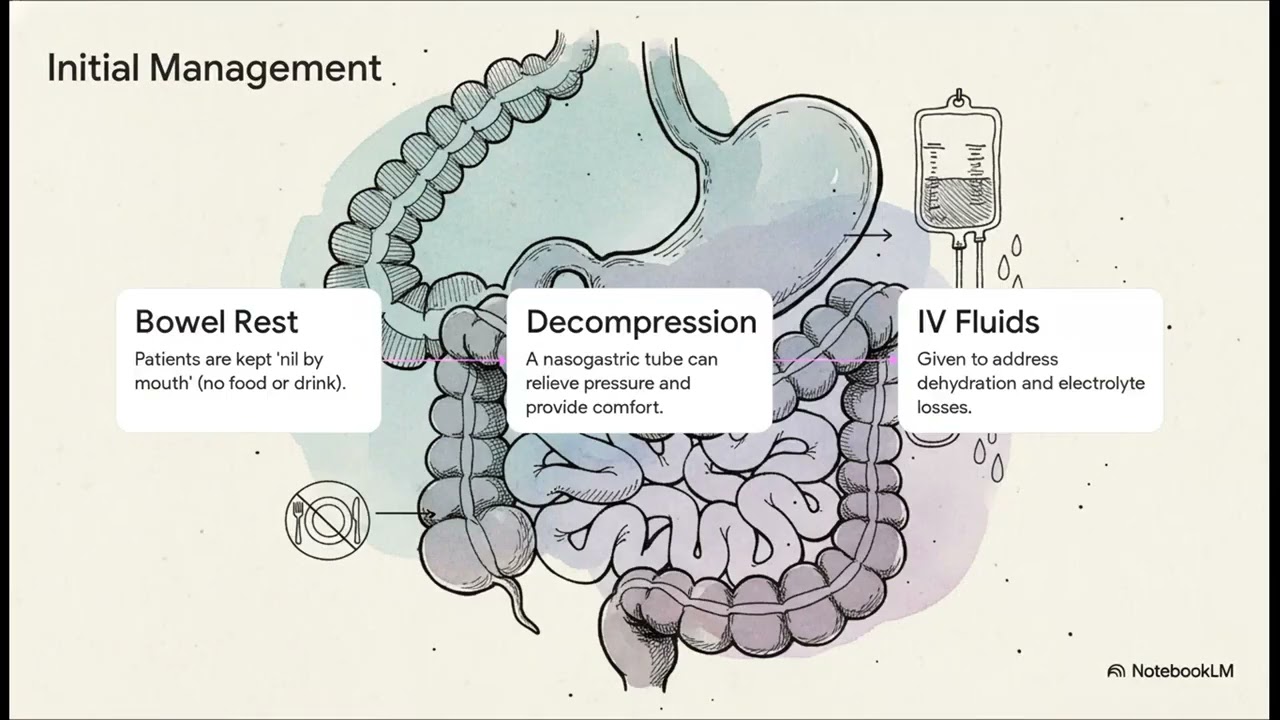
- Non-Surgical Management: Most partial obstructions and some complete obstructions without signs of strangulation can be treated conservatively in the hospital. This includes:
- Bowel Rest: You will be instructed not to eat or drink anything (NPO).
- Intravenous (IV) Fluids: To correct dehydration and electrolyte imbalances.
- Nasogastric (NG) Tube Decompression: A tube is placed through your nose into your stomach to remove fluid and gas, which helps relieve pain, nausea, and distension.
- Surgical Management: Surgery is required for a complete obstruction that does not resolve, or if there are signs of bowel strangulation. The goal of surgery is to relieve the blockage. This is typically done by cutting the adhesions (adhesiolysis) that are causing the obstruction. In cases where a section of the bowel is damaged, that part may need to be removed (resection). Surgery can often be performed laparoscopically, but an open approach may be necessary depending on the extent of adhesions.
Self-care
Self-Care and Recovery
Recovery after treatment for an SBO depends on the severity of the obstruction and the treatment received.
- After Non-Surgical Treatment: Your diet will be advanced slowly from clear liquids back to solid food as your bowel function returns.
- After Surgical Treatment: Recovery is similar to other abdominal surgeries. You will be encouraged to ambulate early, and your diet will be advanced as tolerated. It is important to follow your surgeon's instructions regarding activity restrictions.
- Prevention: While you cannot prevent adhesion formation, staying hydrated and eating a balanced diet may help maintain good bowel function. Some studies suggest that chewing gum after surgery can help stimulate the return of bowel function.
Frequently asked questions
Can adhesive small bowel obstructions recur?
Yes, unfortunately, having one adhesive SBO increases your risk of having another one in the future, as surgery to treat the obstruction can lead to the formation of new adhesions.
Is there any way to prevent adhesions from forming after surgery?
Surgeons take steps to minimize adhesion formation, such as using gentle tissue handling techniques and preferring minimally invasive (laparoscopic) approaches when possible. However, there is no guaranteed way to prevent them.
What is the difference between a partial and a complete obstruction?
In a partial obstruction, some liquid and gas can still pass through the bowel, and it may resolve with conservative treatment. In a complete obstruction, nothing can pass, which is a more serious condition and more likely to require surgery.