Pelvic Floor
Low Anterior Resection Syndrome (LARS)
Low anterior resection syndrome (LARS) is a collection of bowel-related symptoms, such as incontinence and urgency, that occur after surgery for rectal cancer.
Reviewed by Allen Kamrava, MD, MBA, FACS, FASCRS · Last reviewed 2025-10-12
Overview
What is Low Anterior Resection Syndrome?
Low anterior resection syndrome (LARS) is a term for a collection of symptoms that people may experience after undergoing a low anterior resection (LAR), a type of surgery for rectal cancer where all or part of the rectum is removed but the anus is preserved. The goal of this surgery is to reconnect the colon to the remaining rectum or anal canal to avoid a permanent stoma. However, removing the rectum, which acts as a storage reservoir for stool, and the potential impact of surgery and radiation on the nerves and muscles of the pelvis can lead to significant changes in bowel function.
The syndrome is characterized by a wide range of symptoms that can have a major impact on a person's quality of life. It is very common, with studies suggesting that 50-80% of patients who have had an LAR will experience some degree of LARS.
Symptoms
What are the symptoms of LARS?
The symptoms of LARS can vary in severity and may include a combination of the following:
- Frequency: Needing to have bowel movements much more often than before surgery.
- Urgency: A sudden, strong need to have a bowel movement that is difficult to defer.
- Clustering: Having multiple bowel movements in a short period of time (e.g., 3-4 times within an hour).
- Incontinence: Accidental leakage of gas, liquid, or solid stool.
- Emptying difficulties: A sensation of incomplete evacuation, feeling like you still need to go even after having a bowel movement.
- Variable and unpredictable bowel function: Not knowing when or how often you will need to use the restroom.
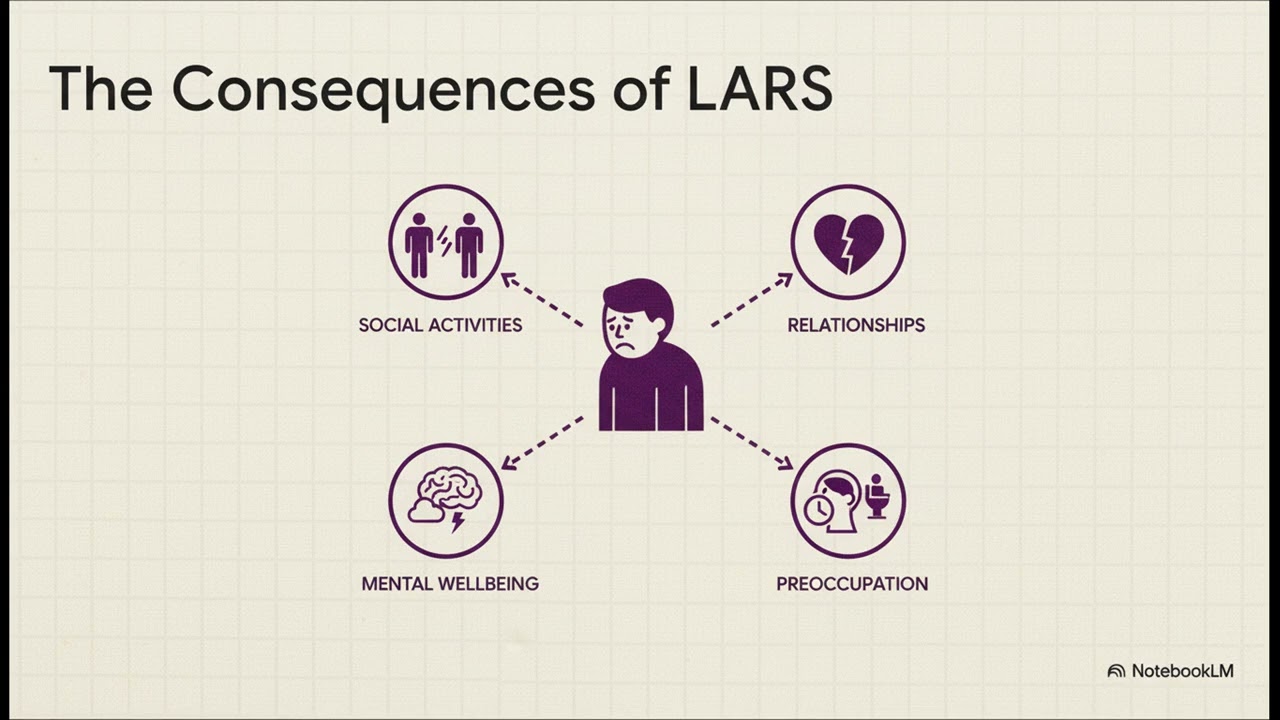
These symptoms often lead to consequences like toilet dependence, constant preoccupation with bowel function, and a negative impact on social activities, relationships, and emotional well-being.
Causes & risk factors
What causes LARS?
The development of LARS is multifactorial and is related to the anatomical and physiological changes that result from rectal cancer treatment.
- Loss of Rectal Reservoir: The rectum's main function is to store stool. When it is removed, the colon is connected directly to the anus. The colon does not have the same storage capacity as the rectum, which leads to more frequent and urgent bowel movements.
- Pelvic Nerve Damage: Surgery and radiation in the pelvis can damage the autonomic nerves that control rectal sensation and sphincter function, leading to impaired control and sensation.
- Sphincter Dysfunction: The anal sphincter muscles can be weakened by the surgical procedure or by the effects of radiation, leading to incontinence.
- Altered Colonic Motility: After surgery, the motility of the remaining colon can be altered, contributing to unpredictable bowel habits.
When to see a doctor
When should I see a doctor?
It is important to discuss your bowel function with your surgical and oncology team at your follow-up appointments after surgery. While some changes in bowel function are expected, you should seek care if your symptoms are severe, are not improving over time, or are significantly impacting your quality of life. There are many treatments available that can help manage the symptoms of LARS. A structured and systematic approach, starting with simple measures, can often lead to significant improvement.
Urgent — get care now
When is it an emergency?
LARS is a chronic condition and is not a medical emergency. However, if you experience a complete inability to pass stool or gas along with severe abdominal pain and bloating, you should seek immediate medical attention as this could be a sign of a bowel obstruction.
Diagnosis & tests
How is LARS diagnosed?
The diagnosis of LARS is made based on a patient's symptoms after they have undergone a low anterior resection. There are validated questionnaires, such as the LARS Score, which can be used to assess the presence and severity of the syndrome.
Before starting treatment for LARS, it is important to rule out other correctable problems that can cause similar symptoms. This evaluation may include:
- Endoscopy: To check the anastomosis for a stricture (narrowing) or for inflammation.
- Anorectal Physiology Testing: Tests like anorectal manometry can assess the strength and coordination of the sphincter muscles and rectal sensation.
- Dynamic Imaging: An MRI defecography can evaluate for structural problems like a rectocele that might be contributing to emptying difficulties.
Treatment
How is LARS treated?
Treatment for LARS is focused on managing symptoms and improving quality of life. A stepwise approach is usually taken, starting with conservative measures.
- Diet and Medication: The first step is often to modify the diet and use medications to change stool consistency and frequency. Bulking agents like fiber supplements can help make stool more formed and easier to control. Anti-diarrheal medications like loperamide are very effective for reducing frequency and urgency.
- Pelvic Floor Physical Therapy and Biofeedback: This can be very helpful for patients with incontinence or emptying difficulties. A specialized therapist can teach exercises to strengthen the pelvic floor muscles and techniques to improve coordination during defecation.
- Transanal Irrigation: This involves regularly washing out the colon with water using a special irrigation system. This can help to establish a predictable bowel routine, reduce incontinence, and provide a sense of security.
- Nerve Stimulation: For patients with significant fecal incontinence that doesn't respond to other treatments, sacral nerve stimulation (SNS) or percutaneous tibial nerve stimulation (PTNS) may be options.
- Surgery: In the most severe and refractory cases of LARS where quality of life is very poor, creation of a permanent colostomy may be the best option to restore comfort and quality of life.
Frequently asked questions
Does LARS ever get better?
Yes. For many people, bowel function will gradually improve over the first 1-2 years after surgery as the body adapts. However, for a significant number of people, some degree of LARS will be permanent. The good news is that with the right management strategies, most people can find significant relief from their symptoms.
Can LARS be prevented?
Prevention is an active area of research. Surgical techniques that create a small colonic reservoir (like a colonic J-pouch or a side-to-end anastomosis) at the time of the initial surgery may lead to better short-term function compared to a straight connection. Also, avoiding pelvic radiation when it is not necessary may reduce the risk of severe LARS.
Is it normal to have such bad bowel problems after rectal cancer surgery?
Unfortunately, yes. Bowel dysfunction is a very common and expected side effect of a low anterior resection. It is important to remember that you are not alone and that there are effective treatments available. Open communication with your healthcare team is the key to finding a management plan that works for you.
References
- Bordeianou L, Messick CA. Low Anterior Resection Syndrome (LARS). In: Steele SR, Hull TL, Hyman N, Maykel JA, Read TE, Whitlow CB, eds. The ASCRS Textbook of Colon and Rectal Surgery. 4th ed. Springer; 2022:1047-1054.
- Keane C, Fearnhead NS, Bordeianou LG, et al. International Consensus Definition of Low Anterior Resection Syndrome. Dis Colon Rectum. 2020;63(3):274-284.
- Emmertsen KJ, Laurberg S. Low anterior resection syndrome score: development and validation of a symptom-based scoring system for bowel dysfunction after low anterior resection for rectal cancer. Ann Surg. 2012;255(5):922-8.