LARS Explained: Bowel Problems After Rectal Surgery
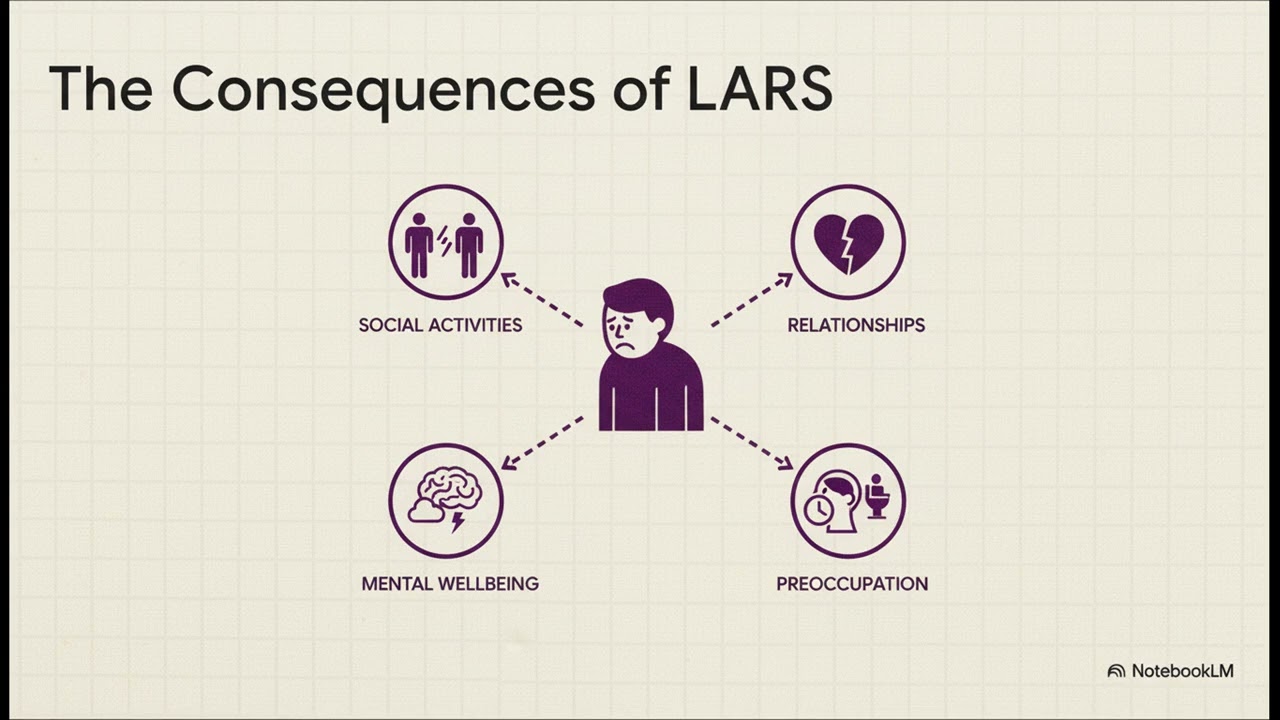
This video addresses Low Anterior Resection Syndrome (LARS), a set of challenges experienced following rectal surgery that can be long-lasting and is considered a chronic condition. LARS results from the surgery changing the "internal plumbing," impacting sensitive nerves, pelvic floor muscles, and removing the rectum (the body's natural storage tank for stool). LARS is defined as disordered bowel function after rectal resection that leads to a detriment in quality of life. Symptoms include urgency, incontinence (soiling), frequent bowel movements, the sensation of incomplete emptying, and clustering (multiple movements in a short period). Diagnosis is usually confirmed about 3 months after surgery or ileostomy reversal, often starting with the patient keeping a bowel diary. Treatment is viewed as building a personal toolkit, following an additive, step-by-step strategy ("treatment ladder"). The foundation involves diet, fiber, and hydration adjustments, followed by medications to regulate function. A key procedure is retrograde colonic irrigation (RCI), a specific technique using water to gently wash out the colon on a predictable schedule, allowing for long symptom-free periods. The goal of management is not a perfect cure, but rather meaningful improvement in quality of life.


