Colon and Rectum
Local Recurrence of Rectal Cancer
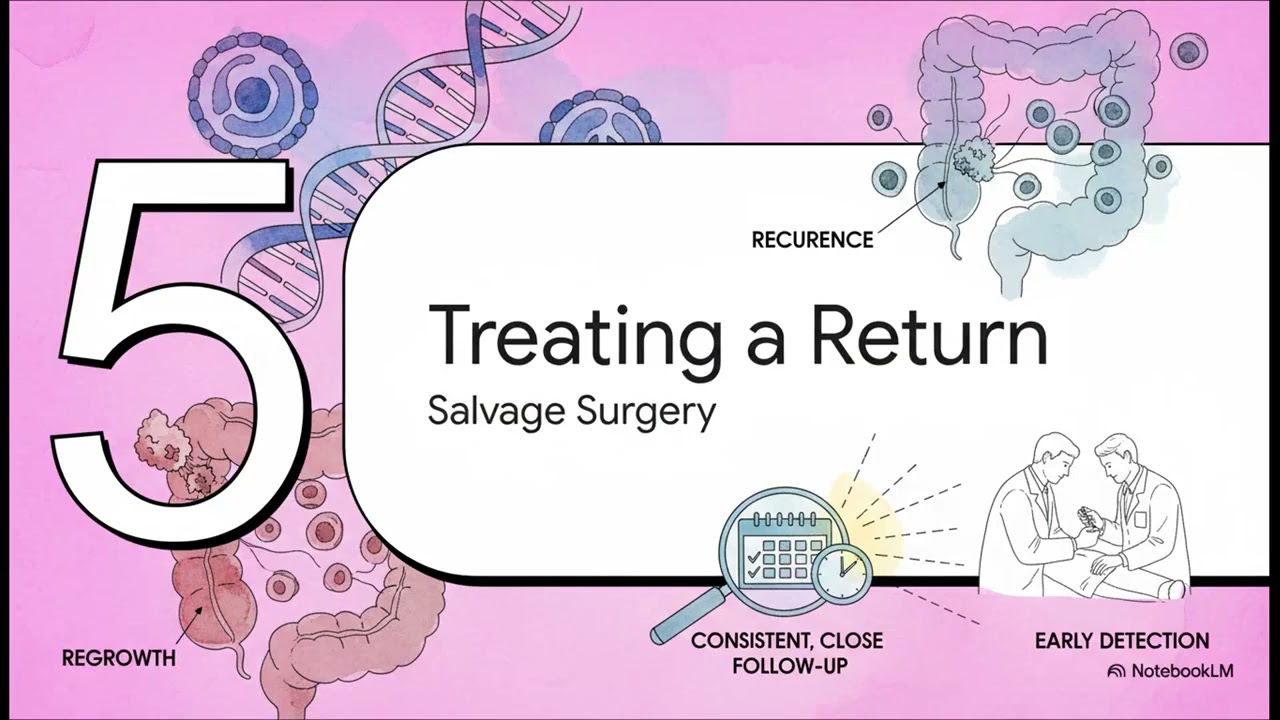
Local recurrence of rectal cancer is the return of cancer in the pelvis after initial curative surgery, a complex condition often requiring aggressive multimodality treatment.
Reviewed by Allen Kamrava, MD, MBA, FACS, FASCRS · Last reviewed 2025-10-12
Overview
What is local recurrence of rectal cancer?
Local recurrence of rectal cancer is the reappearance of the cancer within the pelvis after a patient has undergone surgery with curative intent. This is a challenging and serious condition. Thanks to advances in surgical techniques like Total Mesorectal Excision (TME) and the use of neoadjuvant (preoperative) radiation and chemotherapy, the rates of local recurrence have dropped significantly to around 5-10%. However, when it does occur, it can cause debilitating symptoms and is difficult to treat. The recurrent tumor often grows outside the normal surgical planes and can invade surrounding pelvic organs, bones, and nerves.
Symptoms
What are the symptoms of a local recurrence?
Many local recurrences are found during routine follow-up surveillance before they cause symptoms. When symptoms do occur, they can be varied and may include:
- New or worsening pelvic or back pain: This is a common and often ominous symptom, suggesting invasion of pelvic nerves or bone.
- Changes in bowel or bladder function: This can include difficulty urinating, constipation, or a change in stool shape.
- Rectal bleeding.
- Fistula formation: An abnormal connection from the tumor to the skin, vagina, or bladder.
- Swelling in one or both legs (lymphedema).
Causes & risk factors
Why does rectal cancer recur locally?
Local recurrence happens when microscopic cancer cells are left behind in the pelvis after the initial surgery. The risk of this happening is higher if:
- The initial surgery was not optimal: For example, if a TME was not performed correctly, or if the surgical margin (especially the circumferential resection margin, or CRM) was positive.
- The initial tumor was advanced: Tumors that were large (T4), had spread to many lymph nodes (N2), or had invaded blood vessels or nerves are at higher risk of recurring.
- Neoadjuvant therapy was not used for a locally advanced primary tumor.
- The tumor has aggressive biology.
When to see a doctor
When should I seek care?
If you are a survivor of rectal cancer, it is crucial to adhere to your recommended surveillance schedule. Any new or persistent symptoms, especially pelvic pain, back pain, or changes in bowel/bladder habits, should be reported to your doctor immediately. Early detection of a local recurrence is critical, as it provides the best chance for potentially curative treatment.
Urgent — get care now
When is a recurrence an emergency?
While local recurrence is a chronic process, it can lead to acute problems. Seek immediate medical attention if you develop:
- Unbearable pain that is not controlled by your usual medications.
- Complete inability to pass stool or urine.
- Heavy rectal bleeding.
- Sudden onset of neurologic symptoms like weakness or numbness in the legs.
Diagnosis & tests
How is a local recurrence diagnosed and staged?
Diagnosing a local recurrence requires a high index of suspicion and a comprehensive workup to determine the extent of the disease and its resectability.
- Physical Examination: A thorough pelvic and digital rectal exam can sometimes detect the recurrent tumor.
- Blood Tests: Measuring the CEA (carcinoembryonic antigen) level is important, as a rising CEA can be the first sign of recurrence.
- Imaging: This is the most critical part of the workup.
- Pelvic MRI: This is the best imaging test to define the local extent of the recurrence, showing its size and relationship to pelvic organs, bones, and neurovascular structures.
- CT Scan of the chest, abdomen, and pelvis is used to look for distant metastases (spread to other organs like the liver or lungs).
- PET/CT Scan: This can be very helpful to confirm that the disease is isolated to the pelvis and to detect any unsuspected distant metastases.
- Biopsy: A biopsy of the suspected recurrence is essential to confirm the diagnosis.
Treatment
How is locally recurrent rectal cancer treated?
Treatment is extremely complex and requires a highly specialized, multidisciplinary team. For patients with isolated local recurrence and no distant metastases, the only chance for a cure is through aggressive treatment, usually involving a combination of therapies.
- Surgery (Pelvic Exenteration): Radical surgery is the cornerstone of curative treatment. This often requires a pelvic exenteration, an extensive operation to remove the recurrent tumor along with any involved adjacent organs. This may include the bladder, prostate, seminal vesicles, uterus, or vagina. If the tumor involves the pelvic sidewall or sacrum, parts of these bones and associated nerves may also need to be removed. This is a major operation with a high risk of complications and often results in permanent urinary and/or fecal stomas.
- Chemotherapy and Radiation: Most patients will receive chemotherapy and/or radiation therapy in addition to surgery. This can be given before surgery (neoadjuvant) to shrink the tumor and increase the chance of a complete removal, or after surgery (adjuvant). For patients whose recurrence is deemed unresectable, chemotherapy and radiation are used for palliative care to control symptoms and slow the progression of the disease.
- Intraoperative Radiation Therapy (IORT): In some centers, a single high dose of radiation can be delivered directly to the tumor bed during surgery.
Frequently asked questions
Can locally recurrent rectal cancer be cured?
Yes, but it is very challenging. With modern, aggressive multimodality treatment at a specialized high-volume center, a 5-year survival rate of 40-50% can be achieved, but only if a complete surgical resection with negative margins (an R0 resection) is possible.
What is a pelvic exenteration?
A pelvic exenteration is a major operation to remove a locally advanced or recurrent cancer in the pelvis. It involves removing the rectum and/or anus, and often includes the en bloc removal of other pelvic organs that are involved by the tumor, such as the bladder, uterus, or prostate. The goal is to achieve a clear margin around the entire tumor. It is a life-altering surgery that can offer the only hope for a cure.
What happens if the recurrence cannot be surgically removed?
If the recurrence is unresectable, treatment is focused on palliative care. This involves using chemotherapy and/or radiation therapy to slow the tumor's growth, manage pain, and alleviate other symptoms like bleeding or obstruction, with the goal of maximizing the patient's quality of life.
References
- Solomon MJ. Locally Recurrent Rectal Cancer. In: Steele SR, Hull TL, Hyman N, Maykel JA, Read TE, Whitlow CB, eds. The ASCRS Textbook of Colon and Rectal Surgery. 4th ed. Springer; 2022:561-577.
- National Comprehensive Cancer Network. Rectal Cancer (Version 1.2024). Accessed October 12, 2025. https://www.nccn.org/professionals/physician_gls/pdf/rectal.pdf
- PelvEx Collaborative. Factors affecting outcomes following pelvic exenteration for locally recurrent rectal cancer. Br J Surg. 2018;105(6):650-657.