Pelvic Floor
Anorectal Pain Syndrome
Anorectal pain syndromes are functional disorders causing rectal pain without an identifiable cause, including levator ani syndrome and proctalgia fugax.
Reviewed by Allen Kamrava, MD, MBA, FACS, FASCRS · Last reviewed 2025-10-12
Overview
What is Anorectal Pain Syndrome?
Anorectal Pain Syndromes are a group of functional disorders characterized by chronic or recurrent rectal pain that cannot be attributed to a structural or organic cause like a fissure, abscess, or tumor. These conditions are diagnosed after a thorough evaluation has ruled out other problems. The pain is believed to originate from the muscles of the pelvic floor, particularly the levator ani muscles.
The two main types of anorectal pain syndrome are:
- Levator Ani Syndrome (Chronic Proctalgia): This is characterized by a vague, dull ache or pressure sensation high in the rectum that is often worsened by sitting and may be present for prolonged periods (more than 20-30 minutes at a time).
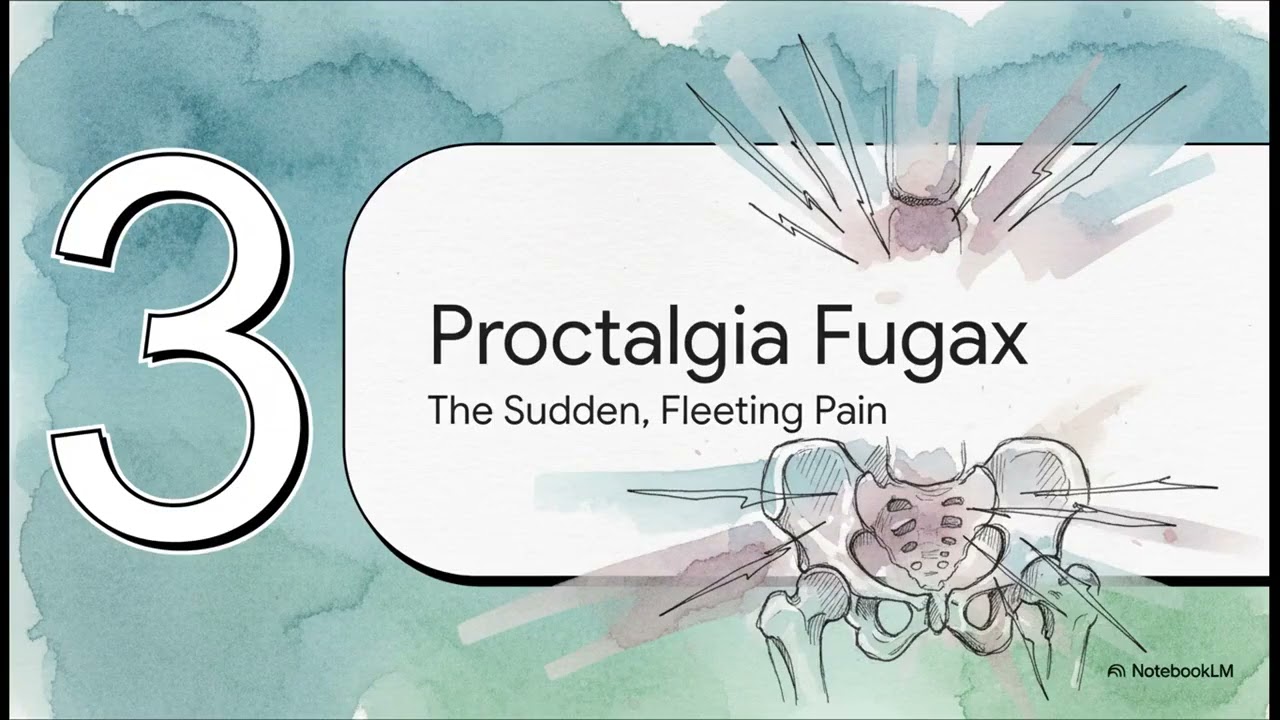
- Proctalgia Fugax: This involves sudden, severe, spasmodic rectal pain that lasts for only a few seconds to minutes and then disappears completely. Episodes are infrequent and can be intense enough to awaken a person from sleep.
Symptoms
Common Symptoms
The symptoms vary depending on the specific syndrome:
Levator Ani Syndrome:
- A vague, dull ache or feeling of pressure in the rectum.
- Pain that is often worse when sitting and may be relieved by walking or lying down.
- A feeling of incomplete evacuation after a bowel movement.
- The pain is typically chronic or recurs frequently, lasting for more than 20-30 minutes per episode.
Proctalgia Fugax:
- Sudden, severe, sharp, or cramping pain in the anus or rectum.
- Episodes are brief, lasting from a few seconds up to 30 minutes.
- The pain resolves completely between episodes.
- Episodes can be infrequent, occurring less than 5 times a year in many individuals.
- The pain can be severe enough to wake a person from sleep.
Causes & risk factors
What causes anorectal pain syndromes?
The exact cause of these syndromes is not well understood. They are considered "functional" disorders, meaning there is a problem with how the anorectal system is working, rather than a clear structural problem. Several factors are thought to contribute:
- Pelvic Floor Muscle Spasm: The leading theory is that the pain is caused by spasm or tension in the pelvic floor muscles, particularly the levator ani and puborectalis muscles. This is why Levator Ani Syndrome is often described as a tension headache of the pelvis.
- Nerve Issues: Irritation or dysfunction of the nerves in the pelvic region, such as the pudendal nerve, may play a role.
- Psychological Factors: Stress, anxiety, and depression are commonly associated with these conditions and may trigger or worsen symptoms.
- History of Trauma: Some patients report a history of pelvic trauma, difficult childbirth, or anorectal surgery prior to the onset of symptoms.
When to see a doctor
When should I see a doctor?
You should see a healthcare provider if you experience any persistent or recurrent rectal pain. It is very important to have a thorough evaluation to rule out other, more serious causes of rectal pain, such as anal fissures, abscesses, inflammatory bowel disease, or cancer. While functional anorectal pain syndromes are not dangerous, they can significantly impact your quality of life. A doctor can confirm the diagnosis and discuss treatment options to help manage your symptoms.
Urgent — get care now
When is it an emergency?
Functional anorectal pain is not an emergency. However, you should seek immediate medical attention if you have severe rectal pain accompanied by fever, chills, significant rectal bleeding, or the inability to pass urine. These could be signs of a serious infection like an abscess, which requires urgent treatment.
Diagnosis & tests
How are these syndromes diagnosed?
Diagnosis is one of exclusion, meaning other causes of pain must be ruled out first. The diagnosis is based on your symptoms and a physical examination.
- Medical History: Your doctor will ask detailed questions about the nature, duration, frequency, and triggers of your pain.
- Physical Examination: A careful examination of the anus and rectum is performed. For Levator Ani Syndrome, the key diagnostic finding is tenderness when the doctor gently presses on the puborectalis muscle during a digital rectal exam. For Proctalgia Fugax, the physical examination is typically normal.
- Anoscopy/Proctoscopy/Colonoscopy: These procedures are often performed to visually inspect the anal canal and rectum to rule out other structural problems.
- Anorectal Manometry: This test measures the pressures of the anal sphincter muscles. In some patients with anorectal pain, it may show elevated resting pressures or paradoxical contraction of the pelvic floor muscles.
Treatment
How are anorectal pain syndromes treated?
Treatment focuses on relieving muscle spasm and managing symptoms. What works for one person may not work for another, and often a combination of therapies is needed.
Levator Ani Syndrome:
- Pelvic Floor Physical Therapy: This is often the most effective treatment. A specialized physical therapist can teach you exercises to relax the pelvic floor muscles. Techniques include biofeedback, where sensors help you learn to control muscle tension, and internal massage (thiele massage) to release trigger points.
- Sitz Baths: Soaking in warm water can help relax the pelvic muscles.
- Medications: Muscle relaxants (like diazepam), nerve pain medications (like gabapentin or amitriptyline), and topical creams may be prescribed.
- Nerve Blocks or Botox Injections: For persistent pain, injections of local anesthetics, steroids, or botulinum toxin (Botox) into the pelvic floor muscles may provide relief.
Proctalgia Fugax:
- Reassurance: Since episodes are infrequent and brief, many people need only reassurance that the condition is benign.
- Acute Episode Management: During an attack, some people find relief from sitting in a warm bath, applying pressure to the perineum, or using an albuterol inhaler (which can relax smooth muscle).
- Preventative Measures: For frequent or severe episodes, topical calcium channel blockers (like nifedipine or diltiazem) may be prescribed to help prevent spasms.
Self-care
Self-Care and Lifestyle
Managing stress and adopting certain habits can help reduce the frequency and severity of symptoms.
- Stress Management: Techniques like mindfulness, meditation, yoga, and regular exercise can be very helpful, as stress is a common trigger.
- Avoid Constipation: Straining during bowel movements can put stress on the pelvic floor. Eat a high-fiber diet, drink plenty of fluids, and avoid prolonged sitting on the toilet.
- Ergonomics: Be mindful of your posture when sitting. Use a cushion (such as a donut or coccyx cushion) to take pressure off the pelvic floor if sitting for long periods is a trigger.
Frequently asked questions
Is this type of pain serious?
No, by definition, functional anorectal pain syndromes are not caused by a serious underlying disease like cancer. The pain itself is the problem. However, because other serious conditions can cause rectal pain, a thorough medical evaluation is always necessary to establish the correct diagnosis.
Will I need surgery?
Surgery is not a treatment for functional anorectal pain. These conditions are related to muscle and nerve function, not a structural problem that can be fixed with an operation. Very rarely, a lateral internal sphincterotomy has been tried for Proctalgia Fugax, but this is not a standard treatment and carries risks of incontinence.
Why is the pain in my rectum if the problem is my pelvic floor muscles?
The levator ani and puborectalis muscles form a sling around the rectum. When these muscles are in spasm or are tense, the pain is often felt or 'referred' to the rectum, similar to how a heart problem can cause arm pain. The pain is real, but its source is the surrounding musculature.
References
- Atkin GK, Suliman A, Vaizey CJ. Patient characteristics and treatment outcome in functional anorectal pain. Dis Colon Rectum. 2011;54(7):870-5.
- Rao SS, Bharucha AE, Chiarioni G, et al. Functional Anorectal Disorders. Gastroenterology. 2016;150(6):1430-1442.e4.
- International Foundation for Gastrointestinal Disorders. Functional Anorectal Pain Disorders. Published November 14, 2020. Accessed October 12, 2025.