Ulcerative Colitis: When to Consider Surgery (J-Pouch Explained)
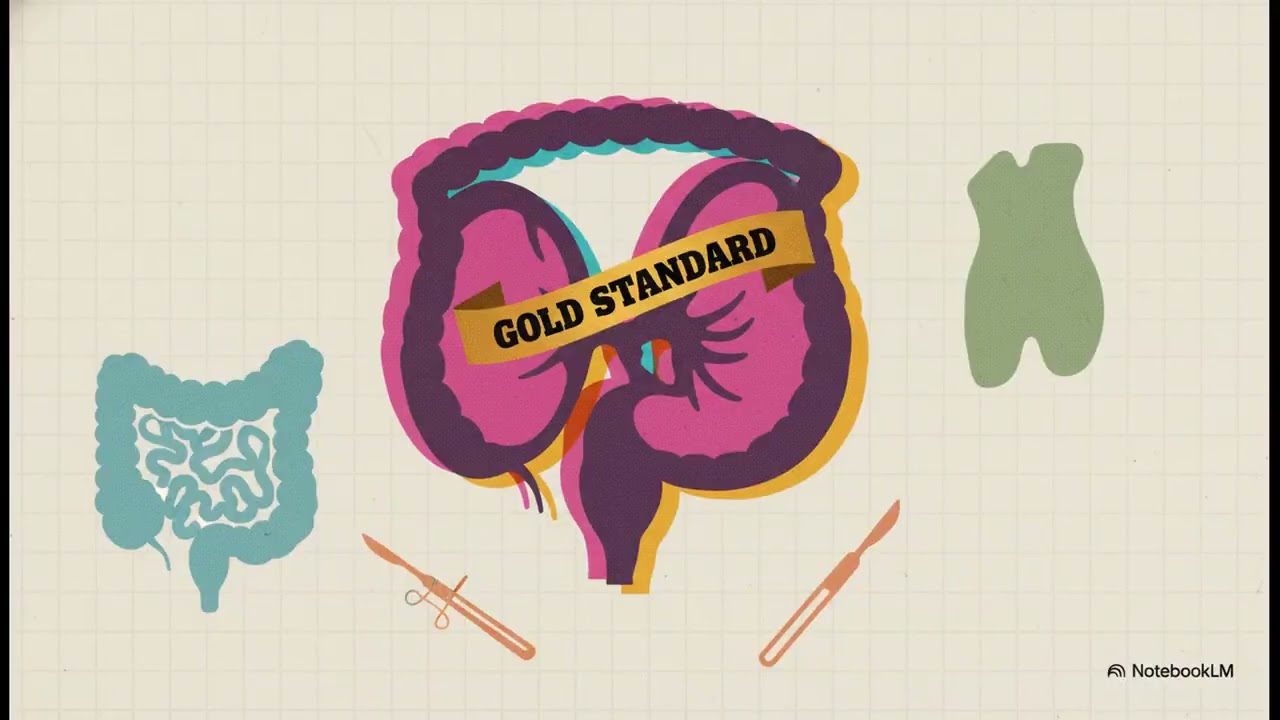
This guide focuses on Ulcerative Colitis (UC), an IBD where inflammation is confined to the innermost lining (mucosa) of the large intestine. Surgery is a common, proactive option for about 3 out of 10 people with UC during their lifetime. Reasons for elective surgery include medication failure, intolerable side effects, or managing the increased risk of colorectal cancer (which jumps to 18% after 30 years with UC). The gold standard procedure is the J-pouch (Ileoanal Pouch Anastomosis or IPAA), which involves 1) removing the diseased colon/rectum, 2) folding the small intestine (ilium) into a J-shaped pouch, and 3) reconnecting the pouch to the anus to restore the natural pathway. It is emphasized that UC patients experiencing worsening symptoms must always be checked for a separate infection, such as C. diff or CMV, as mistakenly treating an infection with immunosuppressants can be dangerous.


