"False" Blockage: When Your Bowel's Signals Break Down
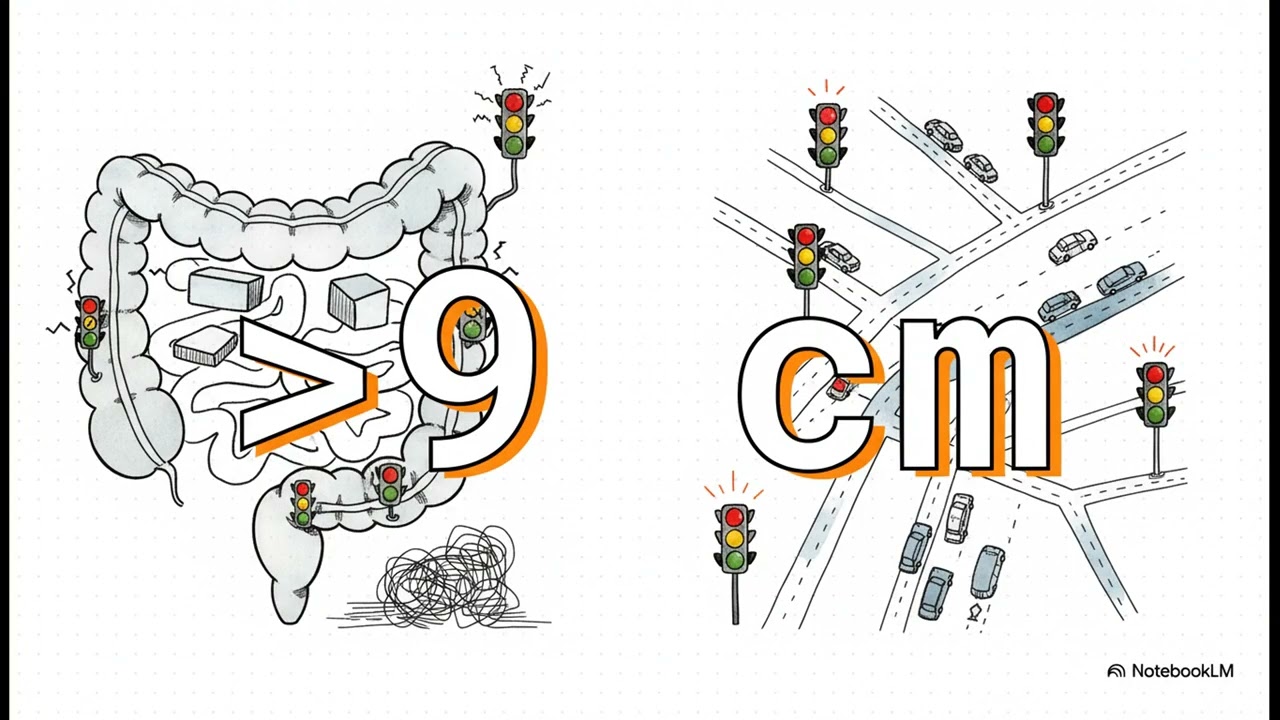
This video explains acute colonic pseudo obstruction, a condition where the colon acts blocked but there is no physical obstruction (a "false" blockage, as "pseudo" means false). It is described using the analogy of a clear highway where the traffic signals (nerve signals) are broken, preventing movement. This condition rarely appears on its own; it is typically a body reaction to major stress, such as recovering from a big surgery or a tough infection. Diagnosis relies on imaging (X-rays or CT scans) to show the colon is dilated (widened) while confirming there is no actual mechanical obstruction. Close monitoring is essential, particularly tracking the size of the cecum (the widest part of the colon, which is under the most strain), with a measurement exceeding 9 cm being a major flag. If the cecum stretches past 10 or 12 cm, the risk of perforation (a tear) increases significantly, which is the main outcome doctors strive to prevent. Treatment follows a clear step-by-step process starting with the least invasive methods. Step one is supportive care (bowel rest, no food/drink, walking), which resolves the issue for an amazing amount of people (around 87%). If rest fails, Step two may involve the medication neostigmine to "jump start" the nerves. Step three is colonoscopic decompression (using a flexible scope to let the air out). Surgery is the absolute last resort reserved for very rare cases where perforation has occurred or all other options have failed.


