A Patient's Guide to Hemorrhoids
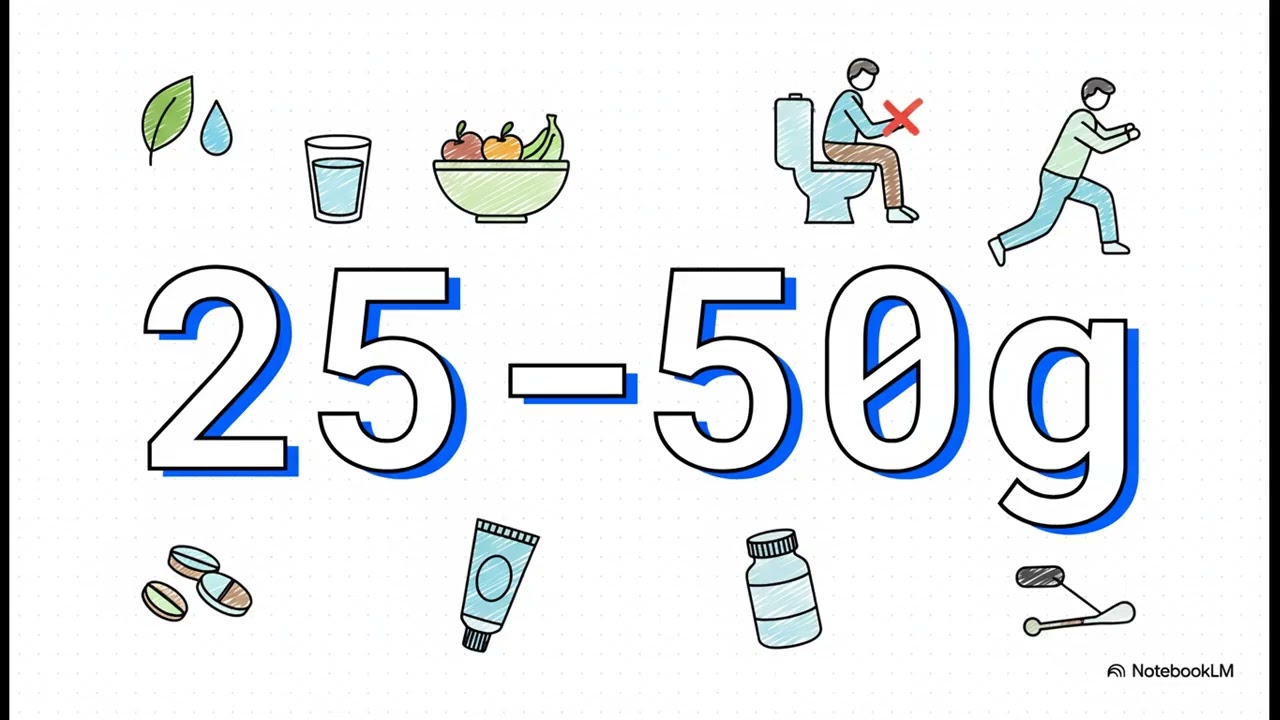
This video provides foundational information about hemorrhoids, explaining that they are normal parts of the anatomy (cushions of tissue and blood vessels) that aid in continence. Problems arise when increased pressure (due to straining, chronic constipation, or pregnancy) causes them to swell and cause symptoms. The two main types are internal (categorized by a grading system based on prolapse severity) and external hemorrhoids. Treatment begins with conservative care (the "most powerful line of defense"), focusing on reducing straining through increased fiber intake (25 to 50 g a day, often via supplements), hydration, proper toilet habits (avoiding long sitting times), and sitz baths. Medical options include quick office-based procedures like rubber band ligation (for less severe internal hemorrhoids) or surgery for more severe or stubborn cases, which is considered the gold standard effective fix.


