Anorectal
Perianal Abscess
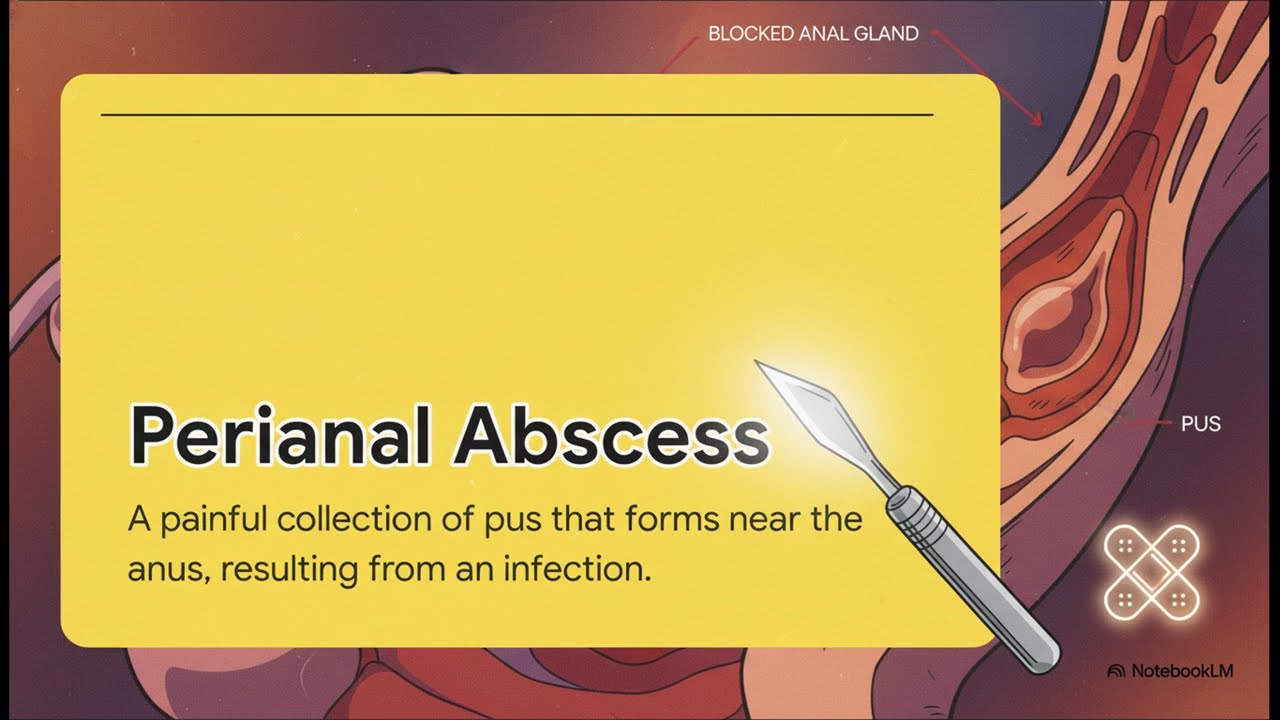
A perianal abscess is a painful, pus-filled lump that forms near the anus, most often resulting from an infection of a small anal gland.
Reviewed by Allen Kamrava, MD, MBA, FACS, FASCRS · Last reviewed 2025-10-11
Overview
What is a perianal abscess?
A perianal abscess is an acute, painful collection of pus that develops in the tissues around the anus. It is the most common type of anorectal abscess. The majority of these abscesses originate from a bacterial infection in one of the small glands located inside the anal canal. When the duct of one of these glands becomes blocked, bacteria can multiply and form an abscess. The infection can then spread into the different potential spaces around the anus and rectum, such as the perianal space, which is just under the skin surrounding the anal opening.
Symptoms
Common Symptoms
The primary symptom of a perianal abscess is a constant, throbbing pain near the anus that is often worse with sitting, moving, or having a bowel movement.
Other common symptoms include:
- A tender, red, swollen lump near the anus.
- Fever and chills: These systemic symptoms indicate a more significant infection.
- Fatigue or feeling generally unwell.
- Painful bowel movements.
- Spontaneous drainage of pus from the lump, which may relieve the pain.
Causes & risk factors
What causes a perianal abscess?
Most perianal abscesses are caused by an infection of a small anal gland. This is known as the cryptoglandular theory.
- Anal Gland Infection: The anal glands, located at the dentate line inside the anal canal, produce mucus to lubricate the canal. If the duct of one of these glands gets blocked by debris or thick mucus, bacteria can become trapped and multiply, leading to an infection and abscess formation.
Less common causes include:
- Crohn's disease: This inflammatory bowel disease can cause inflammation and abscesses in the perianal area.
- Anal fissure: A tear in the anal lining can sometimes become infected.
- Trauma to the anal area.
- Sexually transmitted infections.
- Tuberculosis or other systemic infections.
When to see a doctor
When should I see a doctor?
You should see a healthcare provider as soon as you develop symptoms of a perianal abscess, such as persistent anal pain and a tender lump. An abscess will not go away on its own and requires medical treatment, usually incision and drainage. Early treatment is important to relieve pain and prevent the infection from getting worse or spreading. Do not try to drain the abscess yourself.
Urgent — get care now
When is it an emergency?
A perianal abscess should be treated urgently. You should seek immediate medical attention if you have severe anal pain along with:
- High fever and chills.
- Nausea, vomiting, or inability to eat or drink.
- Spreading redness and swelling of the skin.
- Difficulty urinating.
These can be signs of a larger, deeper abscess or a rapidly spreading infection (sepsis), which can be life-threatening if not treated promptly.
Diagnosis & tests
How is a perianal abscess diagnosed?
The diagnosis of a perianal abscess is usually made based on a physical examination. The doctor will look for a red, swollen, and tender lump near the anus. The area will typically be very sensitive to the touch.
- Physical Examination: In most cases, the diagnosis is clear from the patient's symptoms and the physical appearance of the perianal area. A digital rectal exam may be performed cautiously to assess for any deeper extension of the abscess.
- Imaging: For deeper abscesses (such as ischiorectal or supralevator abscesses), or in cases where the diagnosis is not clear from the physical exam, imaging tests may be ordered:
- Computed Tomography (CT) scan: Can help identify the location and extent of the abscess.
- Magnetic Resonance Imaging (MRI): Provides excellent detail of the soft tissues and can help identify any associated fistula tracts.
- Endoanal Ultrasound: Can also be used to visualize the abscess and its relationship to the sphincter muscles.
Treatment
How is a perianal abscess treated?
The standard and most effective treatment for a perianal abscess is incision and drainage (I&D). This is a surgical procedure to open the abscess and drain the pus.
Incision and Drainage: This procedure can often be done in an emergency room or a doctor's office under local anesthesia. For larger or deeper abscesses, it may need to be done in an operating room with sedation or general anesthesia. A small incision is made in the skin over the abscess to allow the pus to drain out completely. The abscess cavity is then gently irrigated.
Antibiotics: Antibiotics are generally not necessary for simple perianal abscesses after they have been drained. They are usually prescribed for patients who have extensive surrounding cellulitis, are immunocompromised, have diabetes, or show signs of a systemic infection.
Anal Fistula: About one-third of patients with a drained perianal abscess will go on to develop a persistent anal fistula, which is a small tunnel connecting the site of the original gland infection to the skin. If a fistula forms, it will require a separate procedure to treat it at a later time.
Self-care
Self-Care After Drainage
After an abscess has been drained, proper wound care is important to help it heal and prevent recurrence.
- Sitz Baths: Soaking the area in warm water for 10–15 minutes, two to three times a day, can help keep the wound clean and relieve discomfort.
- Wound Care: Your doctor will give you specific instructions for wound care. Often, the wound is left open to drain and heal from the inside out. You may need to gently place a piece of gauze over or lightly in the wound to absorb drainage.
- Pain Management: Over-the-counter pain relievers like acetaminophen or ibuprofen are usually sufficient. Your doctor may prescribe a short course of stronger pain medication if needed.
- Diet: A high-fiber diet and plenty of fluids will help keep your stools soft and make bowel movements more comfortable.
Frequently asked questions
Will an abscess come back after it is drained?
If an abscess is properly drained, it is unlikely to recur in the same spot unless there is an underlying anal fistula. If a fistula is present, the abscess may recur until the fistula itself is treated. The risk of developing a fistula after an abscess drainage is about 30-40%.
Can I just take antibiotics for an abscess?
No, antibiotics alone are not an effective treatment for a perianal abscess. The collection of pus must be surgically drained. Antibiotics cannot penetrate the abscess cavity well and will not resolve the infection on their own.
Is a perianal abscess related to cancer?
No, a typical cryptoglandular perianal abscess is a benign infectious condition and is not related to cancer. However, in rare cases, a persistent or unusual-looking perianal wound could be a sign of anal cancer, which is why proper follow-up with a doctor is important.
References
- Johnson EK, Bernier G. Cryptoglandular Abscess and Fistula. In: Steele SR, Hull TL, Hyman N, Maykel JA, Read TE, Whitlow CB, eds. The ASCRS Textbook of Colon and Rectal Surgery. 4th ed. Springer; 2022:249-270.
- American Society of Colon and Rectal Surgeons. Abscess and Fistula Expanded Information. Accessed September 28, 2026. https://fascrs.org/Web/Patients/Diseases-and-Conditions/A-Z/Abscess-and-Fistula-Expanded-Information.aspx
- Mayo Clinic. Anal abscess. Published August 12, 2021. Accessed October 11, 2025. https://www.mayoclinic.org/diseases-conditions/anal-abscess/symptoms-causes/syc-20352871