Anorectal
Anal Stenosis
Anal stenosis is an abnormal narrowing of the anal canal, often caused by scarring from previous surgery, that leads to difficult and painful bowel movements.
Reviewed by Allen Kamrava, MD, MBA, FACS, FASCRS · Last reviewed 2025-10-12
Overview
What is anal stenosis?
Anal stenosis is a condition where the anal canal becomes abnormally narrow and inelastic. This narrowing is most often caused by scar tissue that forms after anorectal surgery, particularly hemorrhoidectomy. The loss of the normal pliability of the anal canal can make it difficult and painful to pass stool, leading to a cycle of constipation, straining, and further trauma to the area.
While anal stenosis in adults is most commonly a complication of surgery (iatrogenic), it can also be caused by chronic conditions like anal fissures, inflammatory bowel disease (Crohn's disease), long-term use of certain suppositories or laxatives, or radiation therapy. In rare cases, it can be a congenital issue present from birth.
Symptoms
Common Symptoms
The primary symptoms of anal stenosis are related to the difficulty of passing stool through a narrowed opening.
- Painful bowel movements: Often described as a tearing or ripping sensation.
- Straining: Significant effort is required to pass even soft stool.
- Thin, pencil-like stools: The stool is narrowed as it passes through the stricture.
- Bleeding: Bright red blood may be seen on the toilet paper or stool, often from a tear caused by the bowel movement.
- Incomplete evacuation: A feeling that the rectum has not been fully emptied after a bowel movement.
- Constipation: Difficulty passing stool can lead to chronic constipation and, in severe cases, fecal impaction.
Causes & risk factors
What causes anal stenosis?
Anal stenosis is an acquired condition in over 90% of cases, typically resulting from scar tissue formation.
- Previous Anorectal Surgery: This is the most common cause. Overly aggressive hemorrhoidectomy, where too much of the sensitive anal lining (anoderm) is removed, is the leading culprit. Lack of adequate skin bridges between surgical sites prevents proper healing and leads to circumferential scarring and narrowing.
- Chronic Anal Fissures: A long-standing anal fissure can lead to scarring and spasm of the underlying internal anal sphincter muscle, contributing to stenosis.
- Inflammatory Bowel Disease: Chronic inflammation from conditions like Crohn's disease can cause fibrosis and stricturing of the anal canal.
- Radiation Therapy: Pelvic radiation for cancers can cause scarring and loss of tissue elasticity.
- Chronic Laxative Abuse: Long-term use of certain suppositories and laxatives can cause inflammation and scarring.
- Infections: Chronic infections, such as some sexually transmitted diseases or tuberculosis, can lead to scarring.
When to see a doctor
When should I see a doctor?
You should see a healthcare provider if you consistently experience pain, straining, or bleeding with bowel movements, or if you notice a significant and persistent decrease in the caliber of your stool. These symptoms are not normal and require evaluation. A doctor can determine the cause of the narrowing and recommend appropriate treatment to prevent worsening constipation and potential complications like fecal impaction or the development of anal fissures.
Urgent — get care now
When is it an emergency?
Anal stenosis itself is a chronic condition and not typically an emergency. However, you should seek immediate medical care if you are completely unable to pass stool or gas, and have severe abdominal pain, bloating, and vomiting. This could be a sign of a complete bowel obstruction due to fecal impaction, which requires urgent medical intervention.
Diagnosis & tests
How is anal stenosis diagnosed?
The diagnosis of anal stenosis is usually straightforward and made during a physical examination in the office.
- Medical History: Your doctor will ask about your symptoms and any prior anorectal surgeries or conditions.
- Visual Inspection: The doctor will inspect the anal opening, which may appear tight or scarred.
- Digital Rectal Exam: This is the key to diagnosis. The doctor will gently attempt to insert a lubricated finger into the anal canal. In cases of stenosis, there will be significant resistance, and it may not be possible to insert the finger without causing severe pain. The inelastic, tight ring of scar tissue is usually easily palpable.
- Anoscopy: If tolerated, a small scope may be used to visually inspect the anal canal to confirm the narrowing and assess the health of the lining.
- Exam Under Anesthesia: In cases of severe pain that prevent an adequate office examination, an exam under anesthesia may be necessary to fully assess the degree and length of the stenosis and to plan for surgical correction.
Treatment
How is anal stenosis treated?
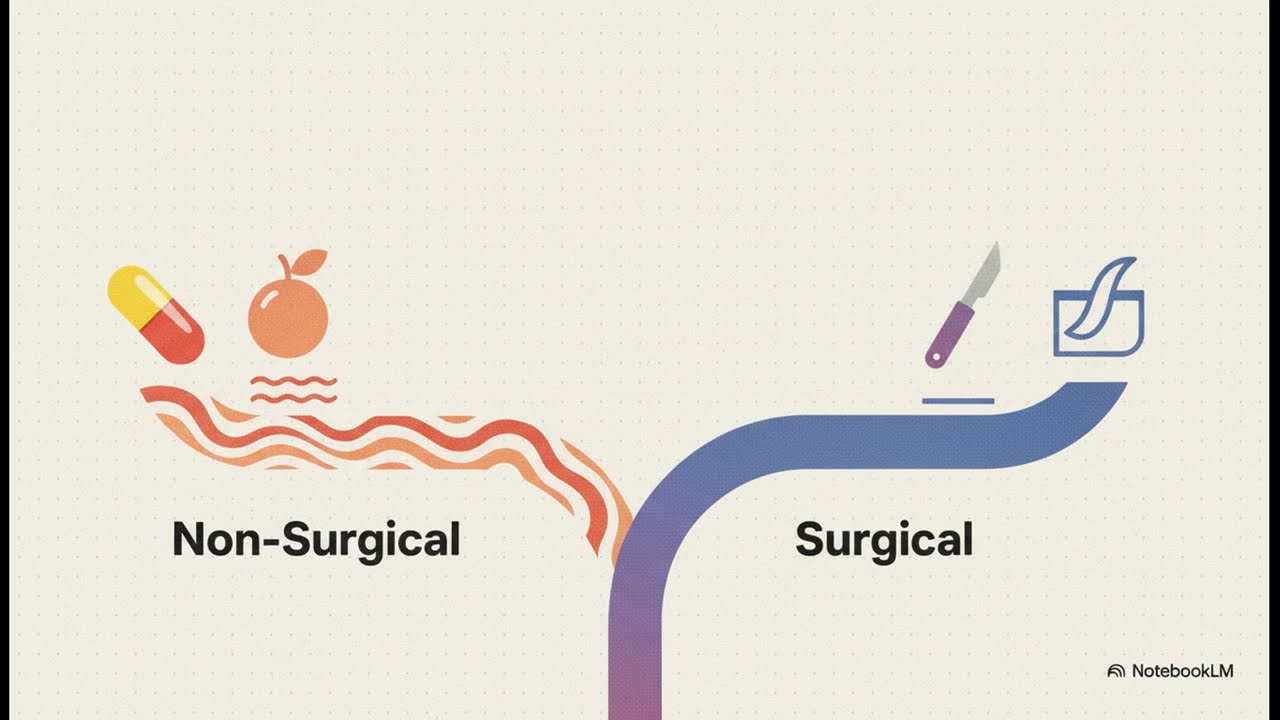
Treatment depends on the severity of the stenosis. Mild cases can often be managed with conservative measures, while moderate to severe cases usually require surgery.
Non-Surgical Treatment (for mild stenosis):
- Dietary Management: A high-fiber diet and increased fluid intake are essential to keep stools soft and bulky, which helps to naturally dilate the anal canal.
- Stool Softeners and Bulking Agents: These can help prevent hard stools that cause trauma and pain.
- Manual Dilation: In some cases, patients may be taught to perform gentle self-dilation at home using anal dilators or a finger.
Surgical Treatment (for moderate to severe stenosis):
Surgery for anal stenosis aims to release the scar tissue and widen the anal opening. This is often accomplished by bringing healthy, pliable tissue into the anal canal.
- Sphincterotomy: A small cut is made in the internal anal sphincter muscle. This can help to relieve some of the tightness, but it does not address the underlying scar tissue of the skin. It is often performed in conjunction with a flap procedure.
- Anoplasty (Advancement Flaps): This is the most common surgical approach. Various techniques, such as a V-Y flap, diamond flap, or house flap, are used. These procedures involve making an incision to release the stricture and then advancing a flap of healthy skin and subcutaneous tissue from the buttock into the anal canal to cover the defect. This introduces healthy, elastic tissue to widen the anal opening. The choice of flap depends on the extent and location of the stenosis.
Self-care
Self-Care for Anal Stenosis
Whether you are managing mild stenosis or recovering from surgery, maintaining soft, regular bowel movements is the most important aspect of self-care.
- High-Fiber Diet: Consistently eat a diet rich in fiber from fruits, vegetables, and whole grains. Aim for 25-35 grams per day.
- Stay Hydrated: Drink plenty of water throughout the day to help fiber work effectively and keep stools soft.
- Use Fiber Supplements: Psyllium (like Metamucil) or methylcellulose (like Citrucel) can be very helpful in achieving the daily fiber goal and creating soft, bulky stools that act as a natural dilator.
- Avoid Straining: Do not force bowel movements. If you have the urge, go to the bathroom, but if nothing happens after a few minutes, get up and try again later.
- Dilation: If recommended by your doctor, perform regular, gentle self-dilation as instructed.
Frequently asked questions
Can anal stenosis be prevented?
Since the most common cause is hemorrhoidectomy, prevention largely lies in the hands of the surgeon. It is crucial that surgeons performing hemorrhoidectomy are experienced and preserve adequate bridges of normal skin and mucosa between excision sites to allow for proper healing and prevent excessive scarring.
Is the surgery for anal stenosis painful?
As with any anal surgery, there will be postoperative pain and discomfort. However, this is managed with a combination of pain medications, sitz baths, and stool softeners. The goal of the surgery is to relieve the chronic pain associated with passing stool through a narrowed opening, so the long-term outcome is a significant reduction in pain.
What is the recovery like after anoplasty?
Recovery typically takes several weeks. It is crucial to maintain very soft stools during this time to avoid putting stress on the new flaps. Sitz baths are important for comfort and hygiene. Most people can return to non-strenuous activities within one to two weeks, but full healing can take six to eight weeks or longer.
References
- Tsikitis VL, Marecik S. Anal Fissure and Anal Stenosis. In: Steele SR, Hull TL, Hyman N, Maykel JA, Read TE, Whitlow CB, eds. The ASCRS Textbook of Colon and Rectal Surgery. 4th ed. Springer; 2022:231-248.
- Milsom JW, Mazier WP. Classification and management of postsurgical anal stenosis. Surg Gynecol Obstet. 1986;163(1):60-64.
- Cleveland Clinic. Anal Stenosis. Accessed September 28, 2026. https://my.clevelandclinic.org/health/diseases/anal-stenosis