Colon and Rectum
Ischemic Colitis
Ischemic colitis is an inflammatory condition of the colon caused by a temporary reduction in blood flow, most often affecting the elderly.
Reviewed by Allen Kamrava, MD, MBA, FACS, FASCRS · Last reviewed 2025-10-12
Overview
What is ischemic colitis?
Ischemic colitis is the most common form of ischemia (insufficient blood flow) affecting the gastrointestinal tract. It occurs when blood flow to a segment of the large intestine (colon) is temporarily reduced, leading to inflammation and injury of the colon wall. This is different from acute mesenteric ischemia, which involves a major blockage of one of the main arteries to the intestines and is a surgical emergency.
Ischemic colitis is typically caused by a 'low-flow' state, not a complete blockage of a large artery. It most commonly affects 'watershed' areas of the colon, which are segments that are at the very end of the blood supply from two different major arteries. The most common locations are the splenic flexure (at the junction of the transverse and descending colon) and the sigmoid colon.
Symptoms
What are the symptoms of ischemic colitis?
The onset of symptoms is usually rapid. The classic presentation includes a triad of:
- Mild to moderate, cramping abdominal pain, typically on the left side.
- Urgency to have a bowel movement.
- Passage of bright red or maroon blood mixed with stool within 24 hours of the pain starting. The bleeding is usually mild to moderate and not life-threatening.
Other symptoms can include nausea, vomiting, and diarrhea. Severe, constant abdominal pain and signs of systemic illness like fever and a rapid heart rate are red flags that may indicate more severe ischemia or gangrene of the colon.
Causes & risk factors
What causes ischemic colitis?
Ischemic colitis occurs when blood flow to the colon is compromised. This is usually due to a nonocclusive (no blockage) reduction in blood flow, rather than a clot in a major artery. Factors and conditions that can increase your risk include:
- Age: It is most common in adults over the age of 60.
- Low blood pressure or shock: Any condition that causes a significant drop in blood pressure (like severe dehydration, heart failure, sepsis, or major surgery) can reduce blood flow to the colon.
- Atherosclerosis: Hardening of the arteries can narrow the small vessels that supply the colon.
- Blood clots: A clot can form in an artery or vein supplying the colon, though this is less common.
- Strenuous exercise: In rare cases, strenuous activity like marathon running can divert blood away from the colon and cause ischemia.
- Certain medications: Some medications can constrict blood vessels or increase the risk of clotting.
When to see a doctor
When should I see a doctor?
You should seek prompt medical attention if you have a sudden onset of abdominal pain, especially if it is followed by bloody diarrhea. While ischemic colitis often resolves on its own, it's important to get an accurate diagnosis and to rule out more serious conditions. It is crucial to be evaluated to ensure that the ischemia is not severe and progressing to gangrene.
Urgent — get care now
When is it an emergency?
Ischemic colitis becomes an emergency if the lack of blood flow is severe enough to cause gangrene (death of the colon tissue) or perforation (a hole in the colon). This is known as fulminant colitis. Signs that this may be happening include:
- Severe, constant, and worsening abdominal pain.
- A rigid, tender abdomen.
- High fever, rapid heart rate, or low blood pressure (signs of sepsis or shock).
These symptoms require immediate emergency medical care and often emergency surgery.
Diagnosis & tests
How is ischemic colitis diagnosed?
Diagnosis is based on the combination of a patient's symptoms and findings on imaging and/or endoscopy.
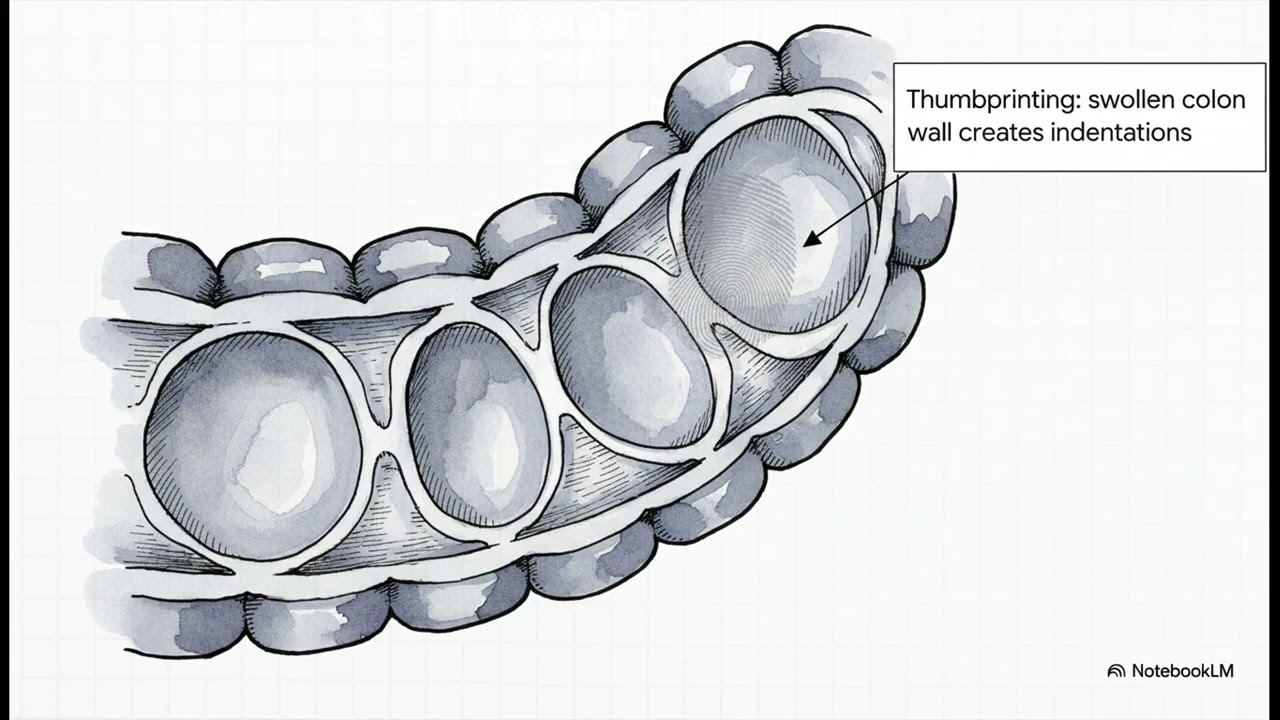
- CT Scan of the Abdomen: This is often the first test performed. It can show signs of inflammation and swelling of the colon wall ('thumbprinting'), which is characteristic of ischemic colitis. A CT scan is also very important for ruling out a perforation.
- Colonoscopy: This is the most accurate test for diagnosing ischemic colitis. A colonoscope is used to look at the lining of the colon. In the acute phase, the doctor may see a segment of the colon that is pale, swollen, and bruised, with bleeding and shallow ulcers. Colonoscopy should be done gently with minimal air insufflation to avoid worsening the ischemia or causing a perforation. It is contraindicated if there are signs of peritonitis or perforation.
- Stool and Blood Tests: These are done to rule out infectious causes of colitis and to assess for signs of severe inflammation or bleeding.
Treatment
How is ischemic colitis treated?
Most cases of ischemic colitis are mild and resolve with supportive care. The goal is to rest the bowel and allow blood flow to be restored.
- Supportive Care: This is the mainstay of treatment. It typically involves a hospital stay for bowel rest (nothing to eat or drink), intravenous (IV) fluids to improve hydration and blood pressure, and observation. Broad-spectrum IV antibiotics are often given to prevent secondary infection.
- Observation: The patient is monitored closely for any signs of worsening, such as increasing pain, fever, or a rising white blood cell count.
- Surgery: Surgery is only necessary in a minority of cases (about 15-20%) where the ischemia is severe and leads to gangrene or perforation. In these cases, an emergency operation is performed to remove the dead segment of the colon. This usually results in a colostomy.
Self-care
Recovery and Follow-up
- Recovery: Once symptoms resolve and you are able to tolerate a diet, you can be discharged from the hospital. Most people make a full recovery.
- Follow-up Colonoscopy: A follow-up colonoscopy is sometimes recommended a few weeks after recovery to ensure the colon has healed completely and to check for the development of a stricture.
- Address Underlying Causes: If a specific cause for the ischemic episode was identified (like a medication or an underlying heart condition), that issue should be addressed to prevent recurrence.
Frequently asked questions
Is ischemic colitis the same as a bowel obstruction?
No. A bowel obstruction is a physical blockage of the bowel. Ischemic colitis is an injury to the bowel wall from lack of blood flow. However, in the long term, a severe episode of ischemic colitis can heal with scarring and lead to the formation of a stricture, which can then cause a bowel obstruction.
Will I get ischemic colitis again?
Recurrence is uncommon, occurring in about 10-15% of patients. The risk of recurrence is higher if there is an ongoing underlying condition that predisposes you to low blood flow states, such as congestive heart failure or kidney failure requiring dialysis.
What are the long-term complications?
The most common long-term complication is the formation of a colonic stricture. This happens when a severe ischemic injury heals with extensive scarring, causing the colon to become narrowed. This can lead to chronic constipation or a bowel obstruction and may require surgery. Another less common complication is segmental colitis, a chronic, low-grade inflammation in the affected area that can mimic inflammatory bowel disease.
References
- Cannon JA, Kennedy GD. Radiation, Microscopic, and Ischemic Colitis. In: Steele SR, Hull TL, Hyman N, Maykel JA, Read TE, Whitlow CB, eds. The ASCRS Textbook of Colon and Rectal Surgery. 4th ed. Springer; 2022:900-903.
- American College of Gastroenterology. Colon Ischemia. Accessed September 28, 2026. https://gi.org/topics/colon-ischemia/
- Mayo Clinic. Ischemic Colitis. Accessed October 12, 2025. https://www.mayoclinic.org/diseases-conditions/ischemic-colitis/symptoms-causes/syc-20351513